Why a breaker keeps tripping, and when to call an electrician
A tripped breaker is the protection working, so the real question is what it had to protect you from.
October 6, 2026 · 4 min read
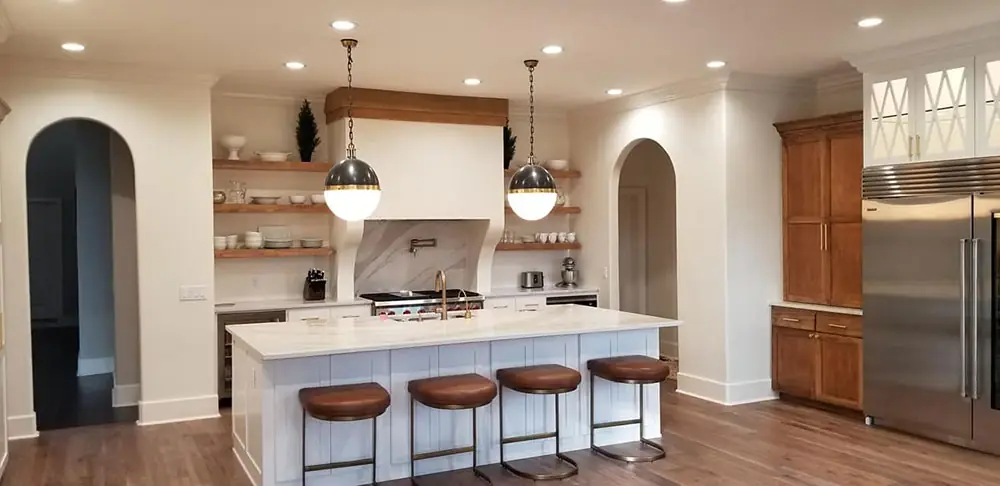
A breaker that trips once on a hot afternoon, with the hair dryer, the microwave and a space heater all running, is doing its job. A breaker that trips every few days for no reason you can see is telling you something. Knowing the difference saves a lot of guessing, and sometimes a lot of risk.
What a breaker is actually doing
A breaker is a safety device first and a switch second. Every circuit in your home is wired with copper of a certain thickness, and that wire can only carry so much current before it starts to heat up. The breaker watches the current. If it climbs past what the wire can safely carry, or if something goes wrong in the circuit, the breaker opens and cuts the power before the wire gets hot enough to hurt anything.
So a trip is not the failure. A trip is the protection working. The question is always why it had to act.
The common reasons a breaker trips
Most trips come down to a short list of causes. Here is how each one tends to look from the homeowner’s side of the panel.
- Overload. Too much is plugged into one circuit. It happens when several heavy appliances run at once, and the breaker usually trips after the load has been on for a minute or two.
- Short circuit. A hot wire touches a neutral wire or another hot wire. The trip is instant, and sometimes there is a pop. Something is damaged: a cord, an appliance, or a wire in the wall.
- Ground fault. Current is leaking to ground, often through moisture. Kitchens, bathrooms, garages and outdoor outlets are the usual suspects, especially after a wet week.
- A worn breaker. Breakers are mechanical parts. After years of service they can weaken and trip at loads they used to carry. They can also fail to trip when they should, and that is the dangerous direction.
- A loose connection. A wire that is not tight on a terminal or behind an outlet runs hot. It does not always trip anything, which is exactly why it is worth finding.
What you can safely check yourself
Start with the simple questions. What was running when it tripped? Unplug everything on that circuit, switch the breaker fully off, then back on, and plug things in again one at a time. If the breaker holds until one particular appliance starts and then trips, you have probably found a bad appliance or a damaged cord.
Stop at the panel cover. Taking it off and working inside the box is where a homeowner check turns into an electrician’s job, and it should stay that way.
Signs it is time to call
- The breaker trips again right after you reset it, with nothing new plugged in.
- You smell something hot or burning near an outlet, a switch or the panel.
- A switch plate or outlet feels warm, looks discolored, or shows a scorch mark.
- Lights dim or flicker when something big starts up.
- The breaker itself feels hot to the touch, or will not stay on.
- An outlet has gone dead and no breaker is tripped anywhere in the panel.
A fault that will not show itself
One customer on Craine’s website, Lucy Claypool, described a dead outlet that took some finding. She wrote that the crew showed up early and “went to extreme measures to locate a faulty outlet.” It took them a little over an hour to track it down, and then the fix took about five minutes.
That ratio is normal. Finding the problem is the real work, and the repair is often small. Behind your walls, outlets are chained together in ways nobody wrote down, so one dead outlet can be fed from a device in another room. An electrician who stays patient through the search is worth more than one who quotes a big replacement on a guess.
Why a bigger breaker is the wrong fix
Swapping in a larger breaker so the tripping stops is the worst fix there is. The breaker is sized to match the wire. A bigger one lets the wire carry more than it was built for, and the thing that was protecting the inside of your wall is gone. The tripping stops because the warning stopped, not the problem.
Calling Craine’s
Craine’s Electric & Drywall handles wiring in new homes, rewiring in remodeled properties, and replacing faulty outlets and breakers, big or small. Their own words are that they treat your home like it is their own and aim to do the job right the first time. Their guys are not paid commission, so the advice you get on a breaker problem is the advice the problem calls for.
A Google review from A McGee describes what a bad day with the power looks like when it goes well: “After a minor miscommunication on the schedule. Josh came out on short notice and had our electric checked and turned back on.”
If a breaker in your house keeps tripping, call (479) 750-1672 in Northwest Arkansas or (417) 952-0828 in Southern Missouri. The office is open Monday to Thursday, 8 to 5. Tell us what was running and what you have already tried, and we will give you a free, fair and honest quote with no strings attached.
Craine's Electric & Drywall, (479) 750-1672
Call (479) 750-1672More articles
Wiring and drywall from one company: what it changes on a new build
The wall is a handoff between two trades, and every handoff is a place where days go missing.
Planning a commercial finish-out: keeping the electrical on schedule
When the doors have to open on a set day, the electrical schedule is the schedule.